HIGGSFIELD · BEHIND THE SCENES

Ein Filmset, das es nie gegeben hat.

Ein Screenshot aus Google Maps wird in ChatGPT zur Miniatur deiner Stadt im Wassertank eines Filmstudios, und Higgsfield lässt die Welle darüber rollen. Alles sieht aus wie zufällig am Set gefilmt. Nichts davon existiert.

Google Maps + ChatGPT + Higgsfield · 9:16 · 15 Sek

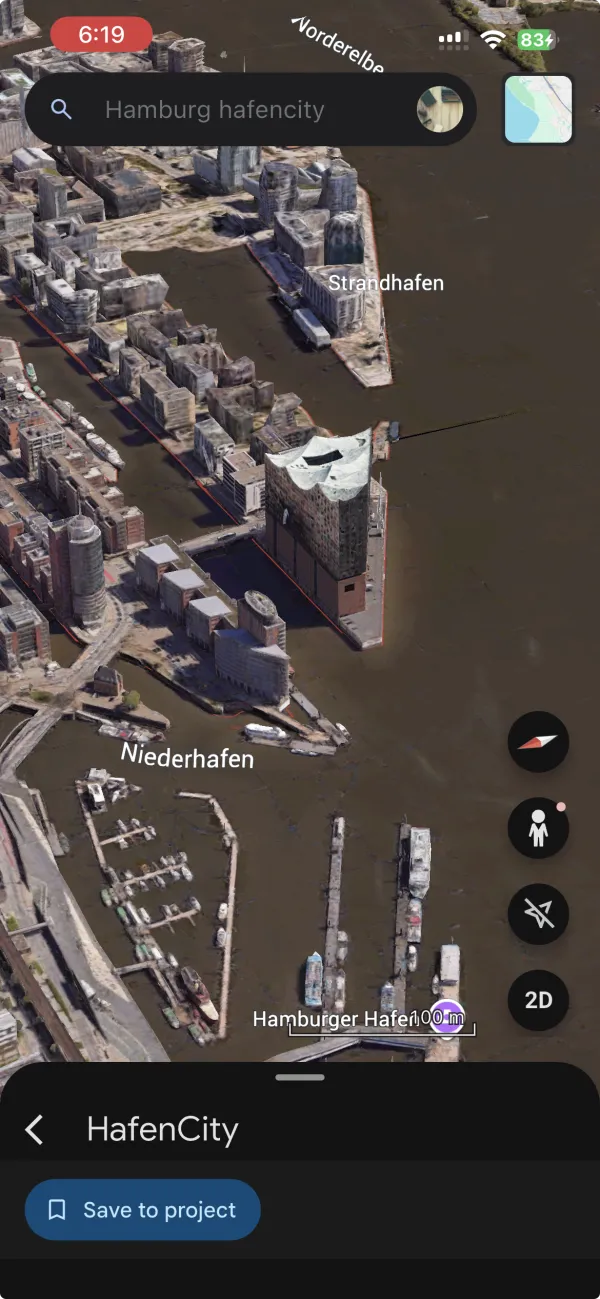
Google-Maps-3D-Ansicht der Hamburger HafenCity mit Elbphilharmonie, schräg von oben
01 · Google Maps 3D
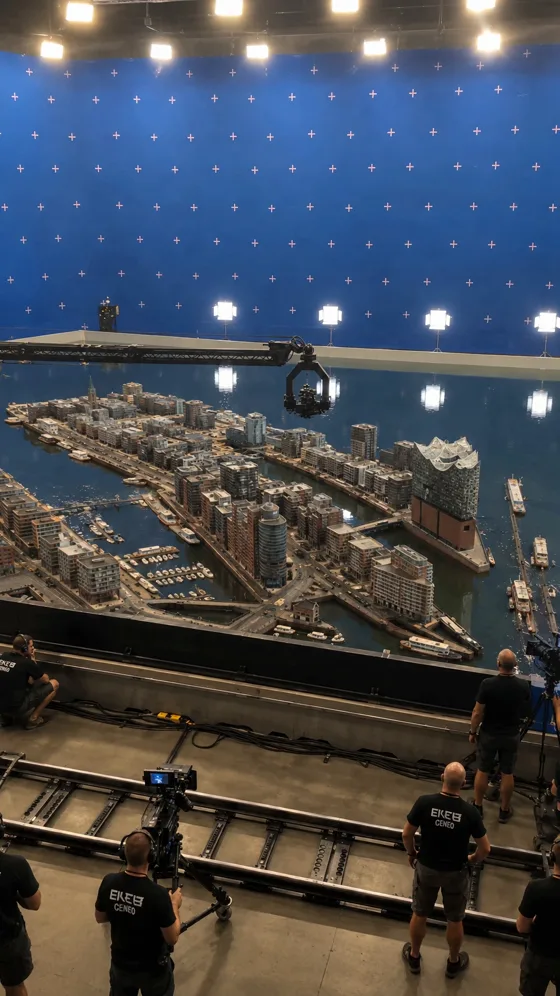
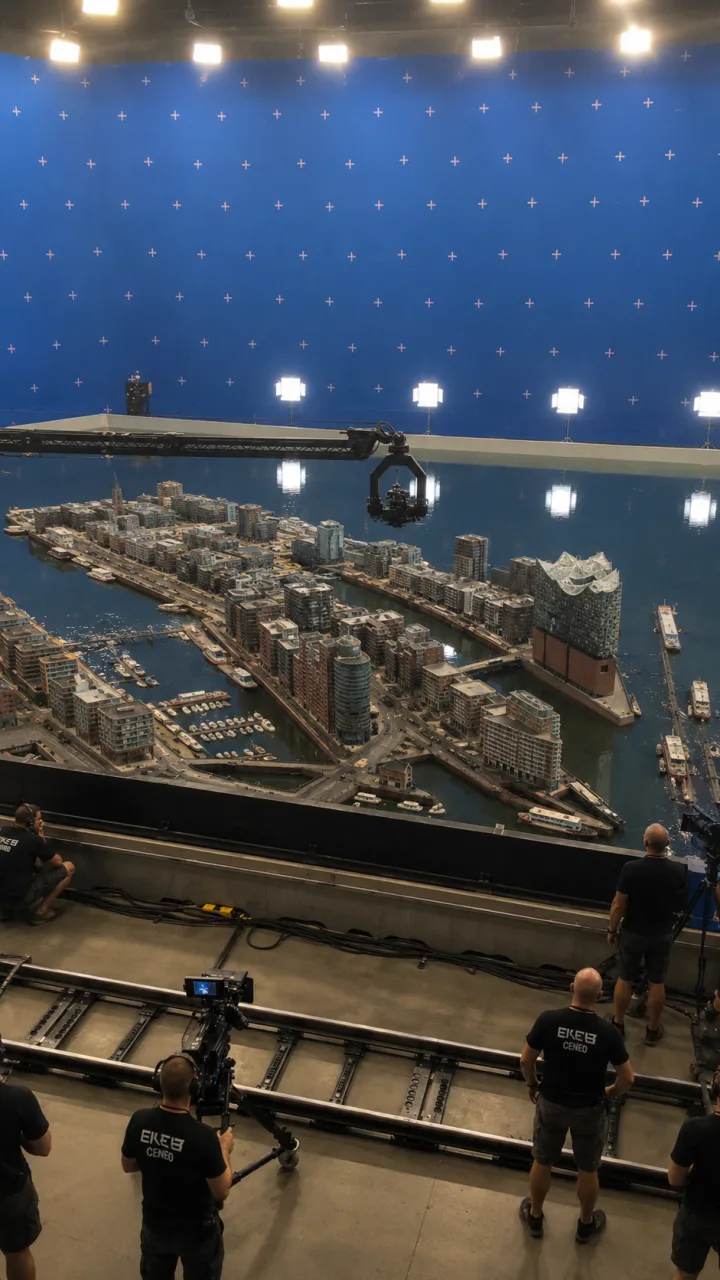
Von ChatGPT generiertes Standbild: Miniatur der Hamburger HafenCity im Wassertank eines Filmstudios
02 · ChatGPT-Standbild
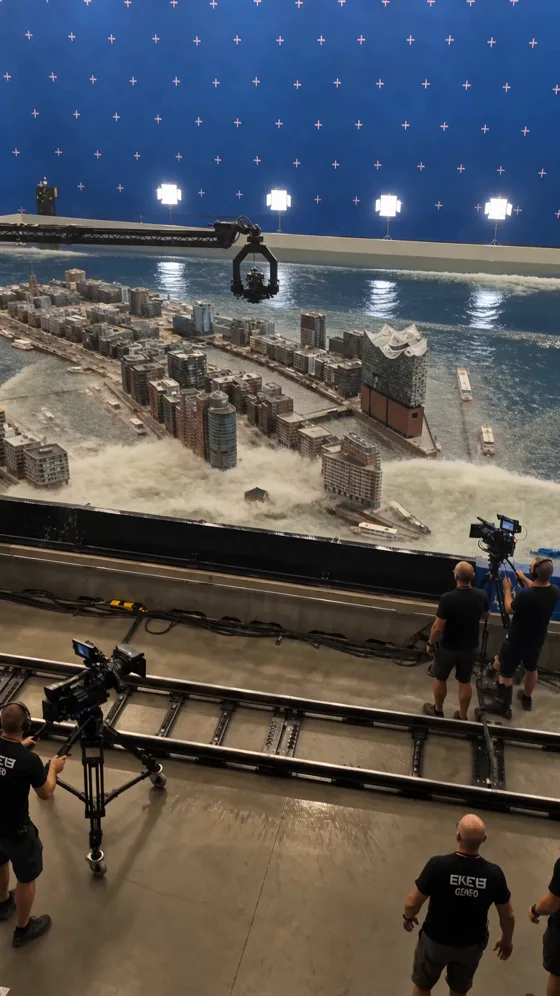
03 · Higgsfield-Video

Was den Miniatur-Fake glaubwürdig macht.

Vier Bausteine, die aus einem Kartenausschnitt echtes Set-Material machen.

01 · GEO-REFERENZ

Echte Geografie statt Fantasie.

Der 3D-Schrägblick aus Google Maps ist der Bauplan: Wasserkanten, Hafenbecken, Straßenraster und die Position jeder Landmark. Ohne ihn baut die Bild-KI eine hübsche, aber erfundene Stadt, mit ihm erkennt jeder sofort seine eigene.

02 · ZWEI REFERENZEN

Stil von A, Stadt von B.

Referenz 1 ist ein echtes Set-Foto und liefert Soundstage, blaue Trackingwand, Kamerakran und Crew. Referenz 2 ist dein Maps-Screenshot. ChatGPT tauscht nur die Modellstadt im Tank aus, Perspektive und Licht bleiben.

03 · HANDY-OPTIK

Es sieht aus wie geleakt.

Hochformat, erhöhter Blick über die Schultern der Crew, leicht schiefe Bildkante, arbeitender Autofokus. Genau diese Unperfektheit verkauft die Szene, ein sauber komponiertes Werbebild würde sofort als KI auffliegen.

04 · DIE WELLE

Und dann bricht das Wasser.

Higgsfield nimmt das Standbild als ersten Frame und spielt 15 Sekunden weiter: Wellenmaschine klackt, das Wasser rollt von hinten heran, bricht an den Kaikanten und schwappt über die Tankwand. Ein Take, kein Schnitt.

Wie der Trick wirklich funktioniert.

01 · Karte = Bauplan

Die Schrägansicht ist entscheidend.

Nicht die Draufsicht, sondern der geneigte 3D-Blick aus Google Maps. Er zeigt Gebäudehöhen, Uferlinien und Landmark-Silhouetten gleichzeitig, genau die Informationen, die eine Miniatur wiedererkennbar machen. Kippe die Karte so, dass deine bekannteste Landmark im Bild liegt.

02 · Standbild = erster Frame

Higgsfield erfindet nichts neu.

Das ChatGPT-Bild geht als exakter erster Frame ins Video. Deshalb steht im Video-Prompt ausdrücklich, dass Studio, Kran, Crew, Trackingwand und Kameraposition erhalten bleiben müssen. Higgsfield animiert dann nur noch, was sich bewegen darf: Wasser, Boote, Menschen.

03 · Sekunden statt Adjektive

Das Timing schreibt die Dramaturgie.

„Dramatische Flutwelle" ergibt Matsch. Fünf Zeitfenster ergeben einen Film: 0–2 Sek Ruhe und „Action!", 2–4 Sek Wellenmaschine, 4–9 Sek Aufprall an den Kais, 9–13 Sek Überlauf auf den Studioboden, 13–15 Sek Abfluss. Jedes Fenster bekommt ein konkretes Ereignis und einen Ton.

04 · Negativliste hält den Maßstab

Miniatur-Wasser ist kleinteilig.

Echtes Modellwasser hat kurze Wellen, kompakten Schaum und schnelle kleine Tropfen. Sagt man das nicht, rendert die KI einen Ozean-Tsunami. Die Negativliste blockt zusätzlich schmelzende Häuser, Palmen, Vollformat-Städte, Schnitte und Untertitel.

Wofür man das wirklich benutzt.

01 · Creator

Die eigene Stadt fluten

Lokalbezug ist der stärkste Reel-Hook, den es gibt: Menschen kommentieren ihre eigene Straße. Ein 15-Sekunden-Take, in dem die Heimatstadt als Filmminiatur absäuft, bringt in Kommentaren mehr Reichweite als jeder Trend-Sound.

02 · Stadt & Tourismus

Die Skyline als Modell zeigen

Ohne Katastrophe funktioniert derselbe Aufbau als charmanter Stadt-Teaser: die Miniatur im Studio, ruhige Kamerafahrt, Licht geht an. Wirkt hochwertiger als Drohnenmaterial, und kostet keinen Drehtag.

03 · Agentur & Pitch

Blockbuster-Mood ohne Budget

Im Pitch verkauft ein vermeintliches Making-of eine Idee besser als jedes Moodboard. Der Kunde sieht ein Set, eine Crew und einen Kran, und glaubt der Produktion, bevor sie überhaupt kalkuliert ist.

04 · Bildung & Doku

Szenarien begreifbar machen

Sturmflut, Hochwasser, Stadtumbau: Als Miniatur im Tank wird ein abstraktes Szenario plötzlich anfassbar, ohne Angst-Ästhetik von Fake-Nachrichtenbildern, weil das Studio drumherum sichtbar bleibt.

Deine zwei Prompts zum Kopieren.

Der erste Prompt geht mit zwei Referenzbildern an ChatGPT und erzeugt das Standbild. Der zweite geht mit genau diesem Standbild an Higgsfield und macht daraus die 15 Sekunden. Beide sind bewusst auf Englisch, Bild- und Video-Modelle folgen englischen Anweisungen deutlich präziser.

bild-prompt.txt · für ChatGPT
Create a vertical 9:16 photorealistic image that looks like a viral behind-the-scenes smartphone capture from a major film production.

REFERENCE IMAGE USAGE:

Reference image 1 is the exact visual style, studio setup and composition reference.

Preserve its overall behind-the-scenes appearance:
- elevated handheld smartphone viewpoint
- large indoor film soundstage
- practical miniature city inside a large water tank
- blue VFX tracking wall with evenly spaced tracking markers
- bright practical studio lights reflected in the water
- large black camera crane extending over the miniature
- suspended cinema camera above the set
- black water-tank walls
- dolly rails and cinema camera equipment in the foreground
- several film crew members in dark production clothing
- visible studio floor, cables and equipment
- casual, imperfect, authentic viral BTS framing

Reference image 2 is the geographic, architectural and urban-layout reference for the miniature city.

Replace the miniature city from Reference image 1 with a highly detailed practical miniature of:

CITY:
[CITY NAME, COUNTRY]

IMPORTANT LANDMARKS:
[LANDMARK 1]
[LANDMARK 2]
[LANDMARK 3]

URBAN CHARACTER:
[DESCRIPTION OF THE CITY'S ARCHITECTURE, STREETS, WATERFRONT, RIVER, HARBOR, PARKS OR SKYLINE]

Use Reference image 2 to reproduce the recognizable urban footprint, waterfront geometry, street structure, building density, harbor edges, islands, canals, bridges and landmark positions of the selected city.

Translate the real city into a believable handcrafted physical miniature built for a high-budget movie production.

The miniature must clearly and immediately read as [CITY NAME]. Include its most recognizable landmarks at geographically plausible positions and with correct architectural characteristics.

The miniature should contain:
- densely detailed scale-model buildings
- miniature roads, sidewalks and bridges
- realistic miniature trees and street furniture where appropriate
- tiny boats, vehicles or trains where appropriate
- detailed waterfront edges, piers, canals or rivers
- handcrafted architectural textures
- realistic scale-model imperfections
- subtle miniature construction seams visible only upon close inspection

The city model must sit naturally inside the practical studio water tank. Water should surround or pass through the miniature only where geographically appropriate for the selected city.

Keep the visual hierarchy of Reference image 1:
The miniature city dominates the middle of the frame.
The blue VFX wall fills the background.
The crane arm crosses the upper-middle area.
The crew and dolly equipment frame the lower foreground.
The image feels accidentally captured during a real movie shoot rather than deliberately staged.

Lighting:
Practical film-studio lighting only. Bright rectangular studio lights above and behind the tank, realistic reflections across the water, neutral phone-camera exposure, mild highlight clipping around lamps, natural shadows and no stylized cinematic color grade.

Camera:
Vertical 9:16 smartphone photograph, elevated high-angle viewpoint, slightly wide phone lens, subtle handheld imperfection, realistic depth of field, natural smartphone sharpness and compression. Not a polished commercial photograph.

Realism:
Ultra-photorealistic physical miniature, believable scale, realistic water reflections, accurate material textures, detailed film equipment, natural crew poses and convincing soundstage proportions.

Do not create a clean architectural visualization. Do not create a satellite image. Do not create a real aerial photograph of the full-size city. It must visibly be a practical miniature city on a film set.

Negative:
generic city, random skyline, incorrect landmarks, duplicated landmarks, fantasy architecture, tropical island, Greek village, beach resort, palm trees unless geographically correct, mountains unless geographically correct, full-size city, real aerial photography, drone photograph, architectural render, CGI visualization, polished advertising image, empty studio, no crew, no camera equipment, missing crane, missing blue tracking wall, centered symmetrical composition, sterile framing, collage, split screen, text overlay, captions, social-media interface, logo, watermark.
video-prompt.txt · für Higgsfield
Vertical 9:16 handheld smartphone video, 15 seconds, one continuous unbroken take, no cuts.

Use the provided image as the exact first frame and visual reference. Preserve the entire film studio, the miniature city, all landmarks, buildings, waterways, boats, camera equipment, crane arm, crew members, blue VFX tracking wall, studio lights, dolly rails, tank walls and camera perspective exactly as shown.

The location is a large indoor film soundstage containing a highly detailed practical miniature of [CITY NAME] inside a large water tank. The miniature must remain recognizably [CITY NAME] throughout the shot. No tropical environment, no beach, no palm trees.

The camera is held from an elevated position behind the crew, looking down toward the miniature city. Authentic behind-the-scenes smartphone footage, slightly imperfect framing, subtle natural handheld movement, realistic phone autofocus and exposure response.

0-2 seconds:
The miniature city and water remain completely still. Crew members quietly wait in position. Reflections from the practical studio lights shimmer slightly on the calm water. An off-screen assistant director calls through the large soundstage with natural room echo:
"And... ACTION!"

2-4 seconds:
A hidden mechanical wave system activates at the far rear side of the water tank behind the miniature city. A heavy pneumatic clunk, metal latch release and deep hydraulic groan are heard. A broad, physically believable swell begins forming across the rear water surface and travels toward the city.

The water must originate from the far side of the tank. It must not appear from the sky, from underneath the buildings or from inside the city.

4-9 seconds:
The wave reaches the outer waterfront and breaks against the miniature quays. Dense miniature-scale whitewater rushes through the canals, streets and harbor basins.

Small boats are pushed from their moorings. Lightweight miniature street props, railings and a few loose facade elements break away naturally. Water flows around [LANDMARK 1] and between the surrounding buildings.

The buildings remain miniature-scale and structurally consistent. No melting architecture, no morphing buildings, no changing city layout and no full-size debris.

Over the rushing water, an off-screen crew member shouts:
"Camera two - stay on [LANDMARK 1]!"

9-13 seconds:
The surge reaches the front edge of the practical water tank and pours over the black tank wall onto the wet studio floor. Water splashes across cables and near the dolly rails.

Crew members react naturally and take several quick steps backward. An off-screen voice shouts:
"Back up! Back up!"

The phone camera drifts slightly to the right and tilts downward just enough to follow the overflowing water, while the miniature city remains visible in the upper part of the frame.

13-15 seconds:
The main surge subsides. Water drains from the miniature streets and harbor edges. Small droplets fall from the tank wall. Loose boats drift slowly. Crew members remain alert while the room fills with draining water, dripping and distant mechanical sounds.

Water physics:
Realistic practical miniature water with small fast droplets, compact foam, visible surface tension, short wave lengths and scale-appropriate splashes. The water must behave like real water filmed around a physical miniature, not like a full-scale ocean tsunami.

Audio:
Live production sound only. Large indoor soundstage reverb. Mechanical release, rushing water, footsteps, boots splashing and distant crew voices. All voices remain off-screen. No visible speaking face, no lip-sync, no narrator, no voiceover and no music.

Camera:
Authentic handheld smartphone recording. Elevated high-angle view. Subtle human shake only. Slight autofocus breathing and natural phone exposure adjustment as the water moves. No cinematic camera orbit, no drone movement, no artificial zoom and no dramatic color grading.

Strict continuity:
Do not add or remove buildings before the wave arrives.
Do not redesign the city.
Do not move or replace [LANDMARK 1].
Do not change the studio layout.
Do not change the camera position abruptly.
Do not transform the miniature into a real full-size city.
Do not introduce tropical vegetation, mountains, beaches or unrelated landmarks.

Negative:
tropical beach, pale sand, palm trees, Greek island, Mediterranean village, resort, countryside, fantasy city, full-size city, real aerial footage, city morphing, melting buildings, changing architecture, duplicated landmarks, giant people, oversized water droplets, ocean-scale tsunami, water appearing from nowhere, explosion, fire, smoke, war scene, centered symmetrical composition, eye-level shot, static tripod shot, drone shot, full body close-up, visible speaking face, lip sync, subtitles, captions, social-media interface, music, score, narrator, cut, transition, scene change.
In 5 Schritten zum Set.

01

Kartenausschnitt ziehen

Google Maps öffnen, deine Stadt suchen, in die 3D-Ansicht wechseln und mit zwei Fingern kippen, bis Landmark und Wasserkante gemeinsam im Bild liegen. Hochkant-Screenshot machen.

02

Stil-Anker besorgen

Ein echtes Behind-the-Scenes-Foto von einem Miniatur-Dreh als Referenzbild 1: Soundstage, blaue Trackingwand, Kran über dem Wassertank, Crew im Vordergrund. Das gibt Perspektive und Licht vor.

03

Standbild in ChatGPT bauen

Beide Bilder hochladen, Bild-Prompt einsetzen und die Platzhalter füllen: Stadt, drei Landmarks, ein Satz zum Stadtcharakter. Nachziehen, bis die Landmarks an der richtigen Stelle stehen.

04

In Higgsfield animieren

Das fertige Standbild als Startbild in Higgsfield laden, Video-Prompt einsetzen, dieselben Platzhalter füllen, 9:16 und 15 Sekunden wählen, dann rendern.

05

Prüfen & exportieren

Zwei Dinge kontrollieren: Kommt das Wasser von hinten (nicht aus dem Nichts)? Bleibt die Stadt erkennbar? Wenn ja: hochskalieren und als 9:16-Reel exportieren.

Ein Screenshot, und deine Stadt säuft ab.

Du brauchst kein Studio, keinen Tank und keine Modellbauer: einen gekippten Maps-Ausschnitt, ein Set-Foto als Stil-Anker und die beiden Prompts oben. Zwanzig Minuten später hast du 15 Sekunden Material, bei denen die Kommentare fragen, wo das gedreht wurde.

Mehr Tipps auf @till.schae

Häufige Fragen.

Warum ein Google-Maps-Screenshot als Referenz?
Weil die Bild-KI sonst eine erfundene Stadt baut. Der 3D-Schrägblick aus Google Maps liefert den echten Grundriss: Wasserkanten, Hafenbecken, Straßenraster und die Position jeder Landmark. Erst dadurch erkennt jeder sofort seine eigene Stadt im Modell, und genau das macht das Video viral.
Welches Referenzbild brauche ich außer dem Kartenbild?
Ein echtes Behind-the-Scenes-Foto von einem Miniatur-Dreh als Stil-Anker: Soundstage, blaue Trackingwand mit Kreuzen, Kamerakran über dem Wassertank, Crew im Vordergrund. Dieses Bild gibt Perspektive, Licht und Bildaufbau vor, der Maps-Screenshot tauscht nur die Stadt darin aus.
Warum stehen im Video-Prompt feste Sekundenangaben?
Weil Higgsfield sonst die Dramaturgie rät. Die Sekundenfenster legen fest, wann noch Ruhe herrscht, wann die Wellenmaschine klackt, wann das Wasser die Kaikante trifft und wann es über die Tankwand schwappt. Ohne dieses Raster kommt die Welle entweder sofort oder gar nicht.
Das Wasser sieht aus wie ein echter Tsunami statt wie Miniatur-Wasser, was tun?
Der Maßstab muss explizit in den Prompt: kleine schnelle Tropfen, kompakter Schaum, kurze Wellenlängen, sichtbare Oberflächenspannung. Dazu die Negativliste mit „ocean-scale tsunami", „full-size city" und „melting buildings". Miniatur-Wasser bewegt sich schneller und kleinteiliger als echtes Meer, sagt man das nicht, rendert die KI Ozean.
Funktioniert das auch ohne Flut?
Ja. Das Standbild ist neutral, im Video-Prompt entscheidest du, was passiert: Nebel über der Modellstadt, ein Sturm, Schnee, ein Feuerwehreinsatz oder einfach ein ruhiger Kamerafahrt-Take über das Set. Das Bild bleibt gleich, nur die 15 Sekunden Handlung wechseln.