SEEDANCE 2.0 · IMAGE-TO-VIDEO PROMPT

Use the provided reference image as the exact final visual destination of the shot.

STYLE
Hyper-realistic live-action footage, first-person POV, physically realistic camera movement, natural water physics, documentary-level realism, cinematic but not stylized, no CGI look, no fantasy animation. The mountain landscape, water, underwater ecosystem, animals, lighting and colors must closely preserve the reference image.

FORMAT
Vertical 9:16.
Single continuous shot.
No cuts, no transitions, no time jumps.
True first-person POV.
Human eye-level / body-mounted perspective.

SCENE
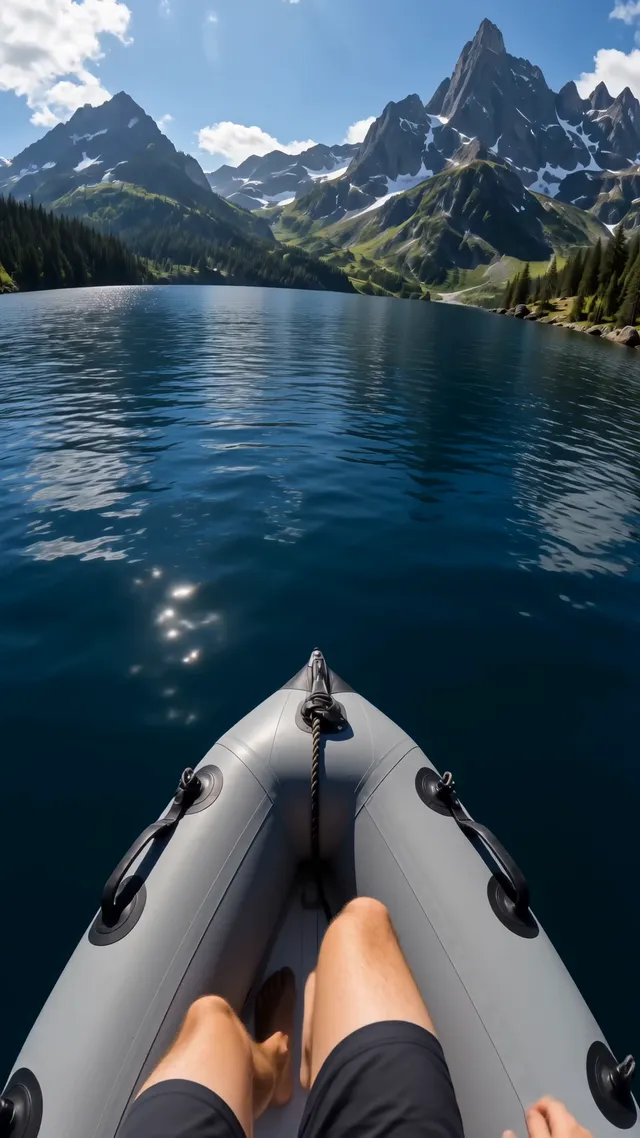
The video begins from the first-person perspective of a person standing at the edge of a small boat floating on a crystal-clear mountain lake.

The viewer looks down past their own legs toward the water. The edge of the boat is visible at the bottom of frame. The spectacular mountain landscape from the reference image stretches across the horizon ahead.

0–2 SECONDS · ON THE BOAT
Natural handheld body movement from breathing and balancing on the boat.
The person steps forward toward the edge.
Their hands briefly enter frame for balance.
The water below is extremely clear, with subtle hints of underwater life visible beneath the surface.
Natural lake ambience, small waves gently touching the boat.

2–4 SECONDS · THE JUMP
The person pushes off the boat and jumps directly into the water.
The POV camera rapidly drops toward the surface.
For a fraction of a second the water rushes upward toward the lens.
Then the camera breaks through the surface.
A realistic splash completely surrounds the camera.
No cut.

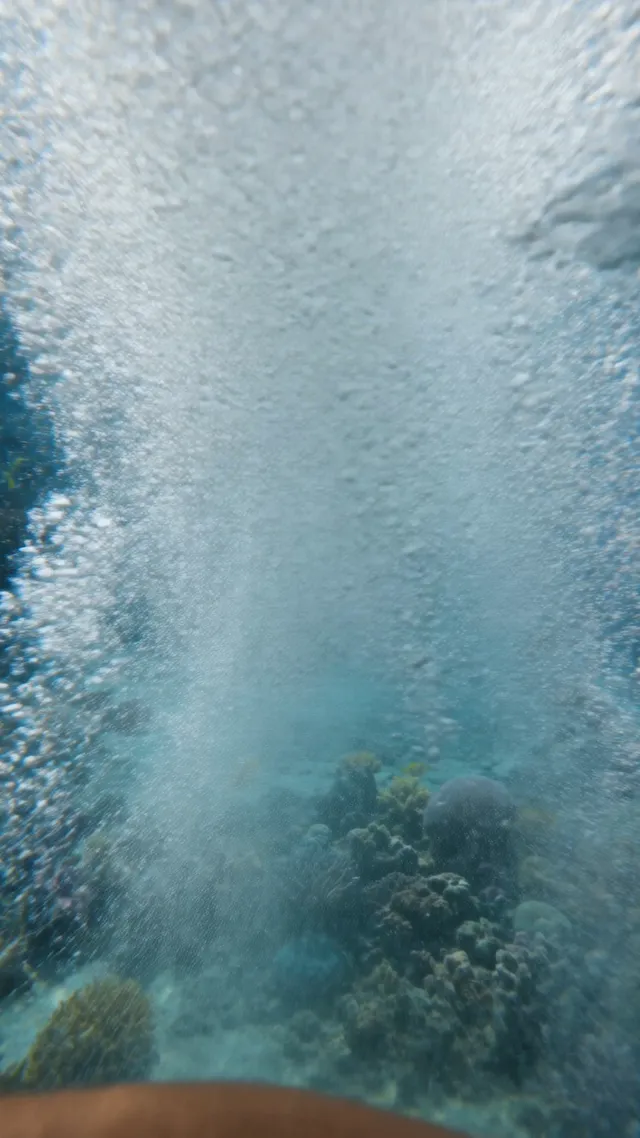
4–6 SECONDS · UNDERWATER IMPACT
The camera becomes fully submerged.
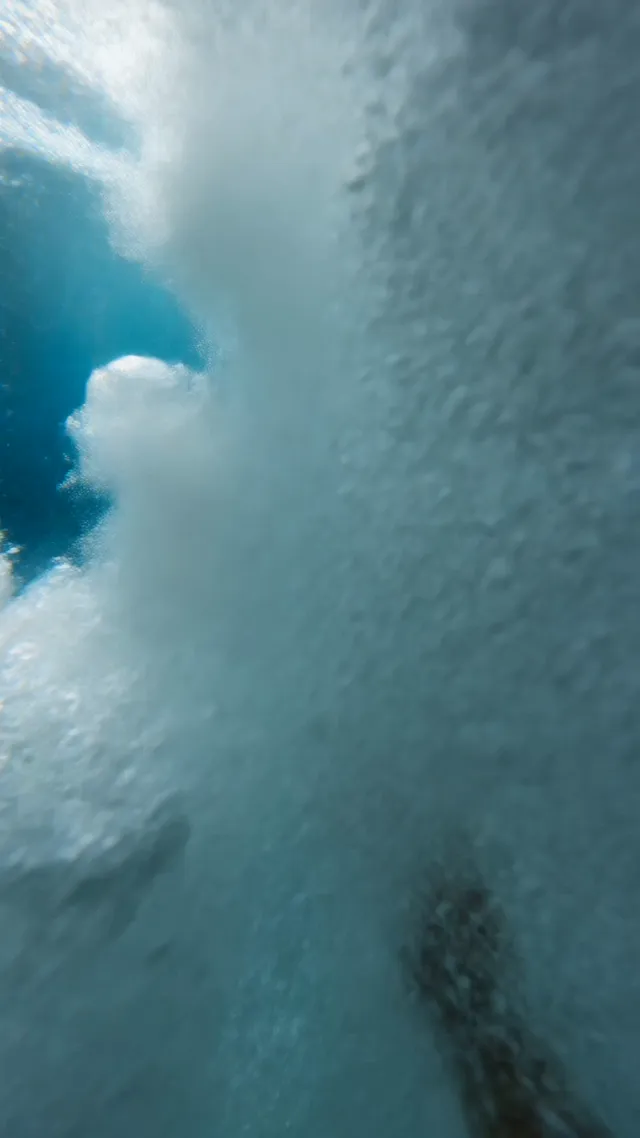
For the first moment visibility is chaotic:
large bubbles rush past the lens,
white turbulence fills the frame,
tiny air bubbles cover parts of the camera,
water droplets and refracted sunlight distort the view.
The person's arms briefly appear in POV, naturally stabilizing underwater.
Sound becomes heavily muffled and underwater.
The turbulence gradually clears.

6–8 SECONDS · UNDERWATER REVEAL
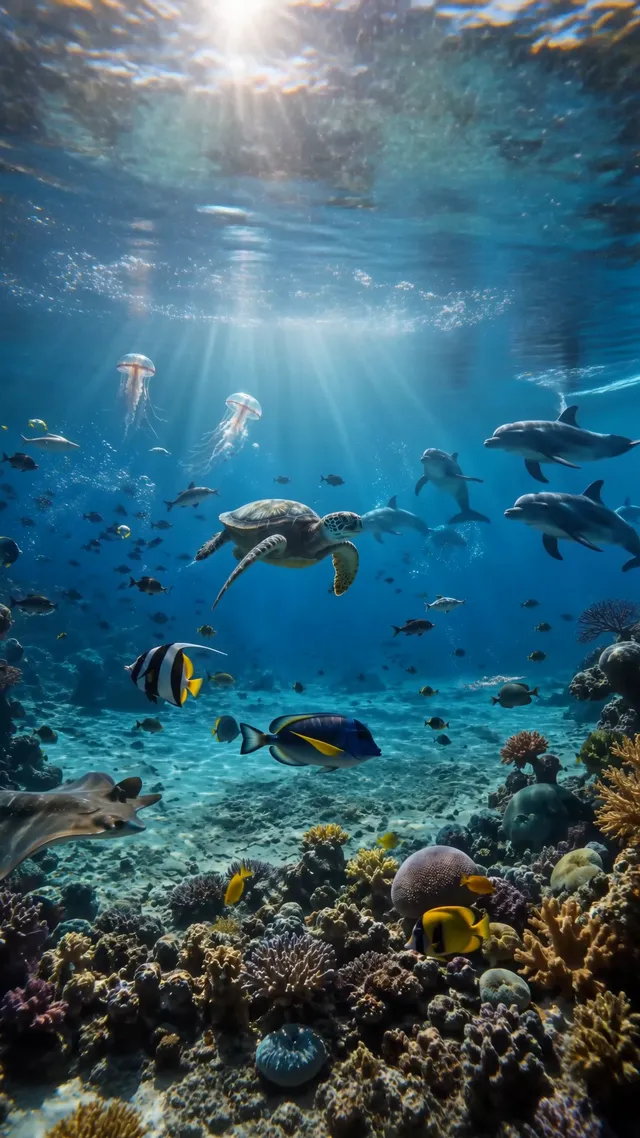
As the bubbles drift upward, the underwater ecosystem is revealed.
A sea turtle glides through mid-distance.
Schools of small fish actively swim through the water.
A group of dolphins move naturally in the distance.
A ray passes lower in the frame near the lake floor.
Jellyfish pulse gently in the sunbeams.
Sunlight rays penetrate the crystal-clear water.
Fine suspended particles and tiny bubbles create realistic underwater depth.

8–10 SECONDS · RISING TO THE SURFACE
The swimmer naturally rises toward the surface.
The camera moves upward through the clear water.
The shimmering underside of the water surface becomes visible overhead.
The camera slowly breaks through the surface until the lens is positioned exactly at the waterline.

10–14 SECONDS · FINAL SPLIT-VIEW MOMENT
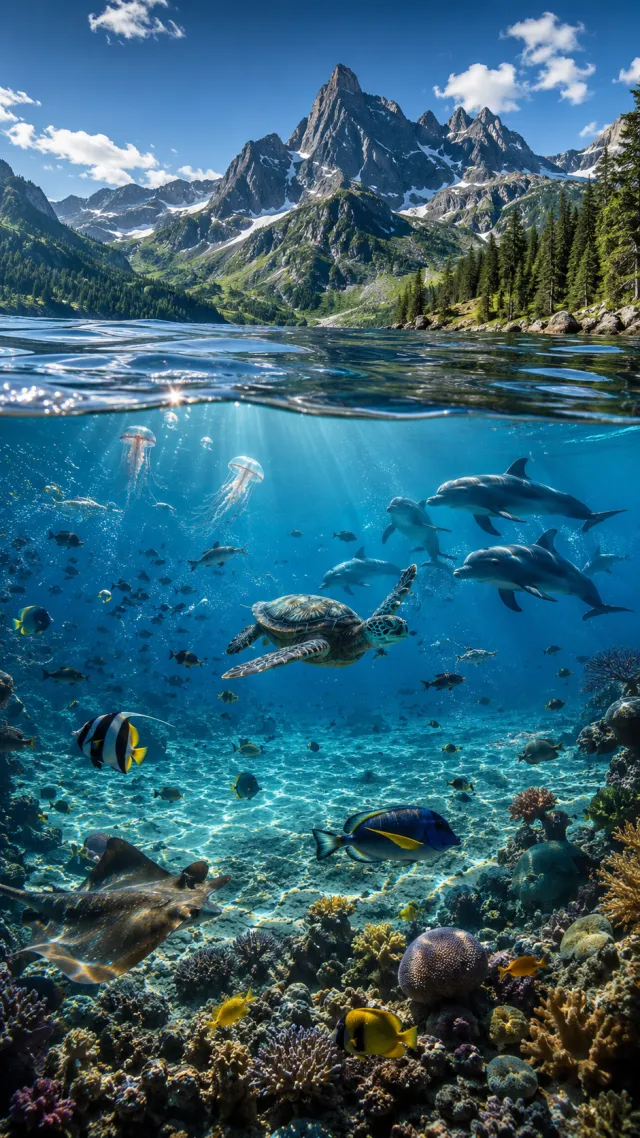
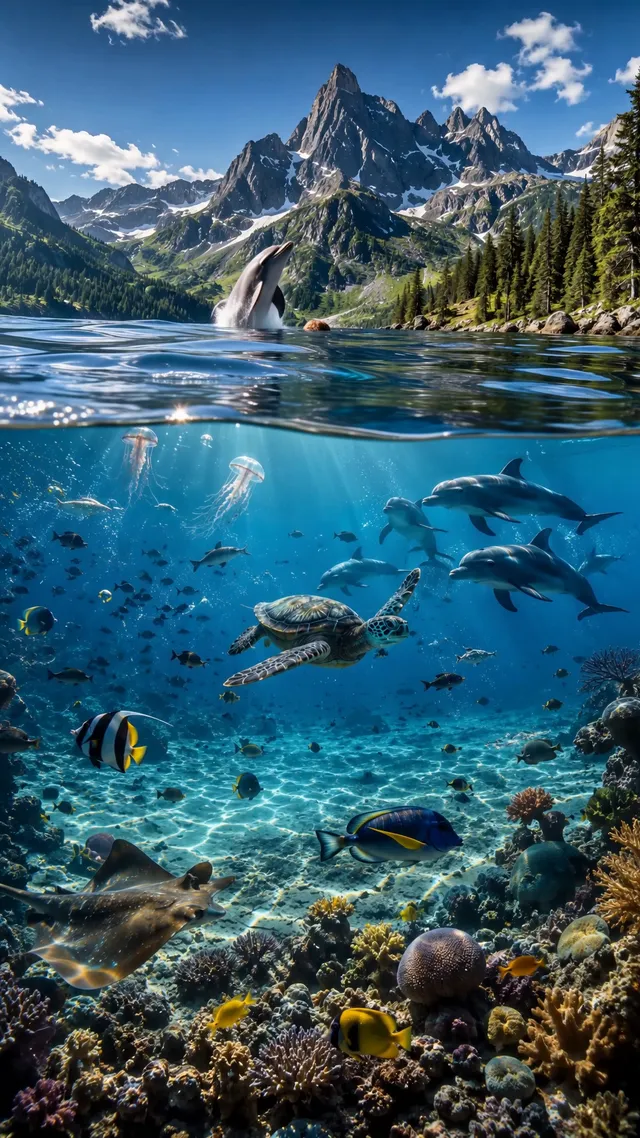
The movement settles into the exact composition of the reference image:
approximately half the frame above water and half underwater.

Above water:
the vast dramatic mountain landscape, green slopes, distant peaks, blue sky and enormous sense of open space.

Below water:
the detailed underwater ecosystem filled with turtles, dolphins, rays, colorful fish, jellyfish and reef life.

The waterline runs naturally across the middle of the frame with realistic waves, refraction, reflection and lens distortion.

The camera gently floats at the surface as if attached to the swimmer's head.
Small waves occasionally move the waterline slightly up and down.
Animals continue moving naturally beneath the surface.
Trees gently move in the distant breeze.
Clouds drift almost imperceptibly.
Sunlight flickers realistically through the moving water.

At this final split-view moment, one dolphin accelerates from underwater toward the surface and performs a natural breach out of the water above the waterline. The dolphin jumps cleanly into the air in front of the mountain background, with a realistic arc, water spray on its body, and a believable splash when it re-enters the lake. The splash creates expanding ripples and slightly disturbs the waterline near the POV camera. After re-entry, the dolphin continues swimming underwater.

The final seconds should feel calm, enormous and breathtaking.

ANIMAL BEHAVIOR & MOTION · CRITICAL
Every animal must move with species-accurate anatomy, locomotion, momentum and interaction with the surrounding water.

No animal should simply float, hover, slide or translate through the scene.

The animals are continuously alive and actively swimming.

DOLPHINS:
Dolphins propel themselves through the water using powerful rhythmic vertical movements of their tail flukes. Their bodies flex naturally through each swimming cycle. Pectoral fins subtly steer and stabilize them.
Several dolphins swim together in a loose pod at different depths.
One dolphin accelerates toward the surface from below. Its tail beats become stronger and faster as it approaches the waterline.
The dolphin breaks through the surface at speed and performs one natural breach into the air.
Its entire body leaves the water in a smooth forward arc.
Water sprays from its skin as it emerges.
For a brief moment the dolphin is clearly visible above the surface against the mountain landscape.
Its body naturally rotates slightly during the airborne arc before gravity pulls it back down.
The dolphin re-enters the lake with a realistic splash, spray, foam and expanding circular ripples.
The splash briefly disturbs the waterline of the POV camera.
The dolphin then continues swimming underwater after re-entry.

SEA TURTLE:
The sea turtle moves through the water using slow, powerful alternating strokes of its front flippers. Each stroke visibly pushes water backward and moves the turtle forward. Its rear flippers make subtle steering corrections. The turtle occasionally changes direction and depth.

RAYS:
The rays swim by continuously undulating their broad pectoral fins in smooth wave-like motions from front to back. Their entire wings flex naturally rather than remaining rigid.

FISH:
Small fish actively propel themselves with rapid tail-fin oscillations.
Schools constantly make small coordinated direction changes, compressing and expanding organically as individual fish react to nearby animals.
Larger reef fish use slower, clearly visible tail movements combined with pectoral-fin steering.

JELLYFISH:
Jellyfish do not translate like rigid objects.
Their bells repeatedly contract and relax, creating visible pulses that propel them gently upward and forward.
Their tentacles trail behind and react naturally to water currents.

UNDERWATER ENVIRONMENT:
Animal movement subtly affects the surrounding environment.
Tiny bubbles trail behind fast-moving dolphins.
Small fish react when larger animals approach.
Suspended particles move with local currents.
Coral and soft underwater vegetation gently respond to water movement.
Sunlight patterns continuously ripple across animals and the seabed.

Animals move independently at different speeds, distances and directions.
They should never appear synchronized or mechanically animated.

CAMERA BEHAVIOR: CRITICAL
True first-person human POV.
Natural inertia during the jump.
Realistic acceleration into the water.
Strong but believable turbulence on impact.
No impossible camera teleportation.
No drone movement.
No orbiting camera.
No artificial cinematic crane movement.
No sudden zoom.

WATER PHYSICS: CRITICAL
The transition through the water surface must be physically convincing.
The lens should briefly become obscured by:
water,
bubbles,
turbulence,
refraction,
and droplets.
Do not instantly reveal a perfectly clear underwater view.
The water must gradually clear after the jump.
When resurfacing, realistically transition from fully underwater to a split over-under perspective.

REFERENCE IMAGE LOCK: CRITICAL
The final environment must strongly preserve the supplied reference image.
Do not redesign the mountains.
Do not change the geography.
Do not replace the underwater animals.
Do not dramatically alter the lighting.
Do not transform the environment into a fantasy world.
The reference image should look as though it has naturally come alive.

PHYSICS LOCK
Realistic acceleration and deceleration.
Realistic inertia.
Realistic water resistance.
Realistic buoyancy.
Natural body deformation during swimming.
Correct fin and tail propulsion.
No sliding.
No hovering.
No frozen animals.
No rigid-body movement.
No mechanical looping animation.
No animals moving without corresponding fin, flipper or body motion.

NEGATIVE CONSTRAINTS
No cuts.
No third-person shots.
No visible camera operator.
No selfie stick.
No slow motion.
No artificial speed ramp.
No morphing animals.
No duplicated animals.
No animals colliding with the camera.
No giant unrealistic animals.
No distorted hands.
No extra limbs.
No cartoon look.
No video-game look.
No artificial CGI water.
No abrupt transition between above and below water.
No camera suddenly appearing at the final position.